
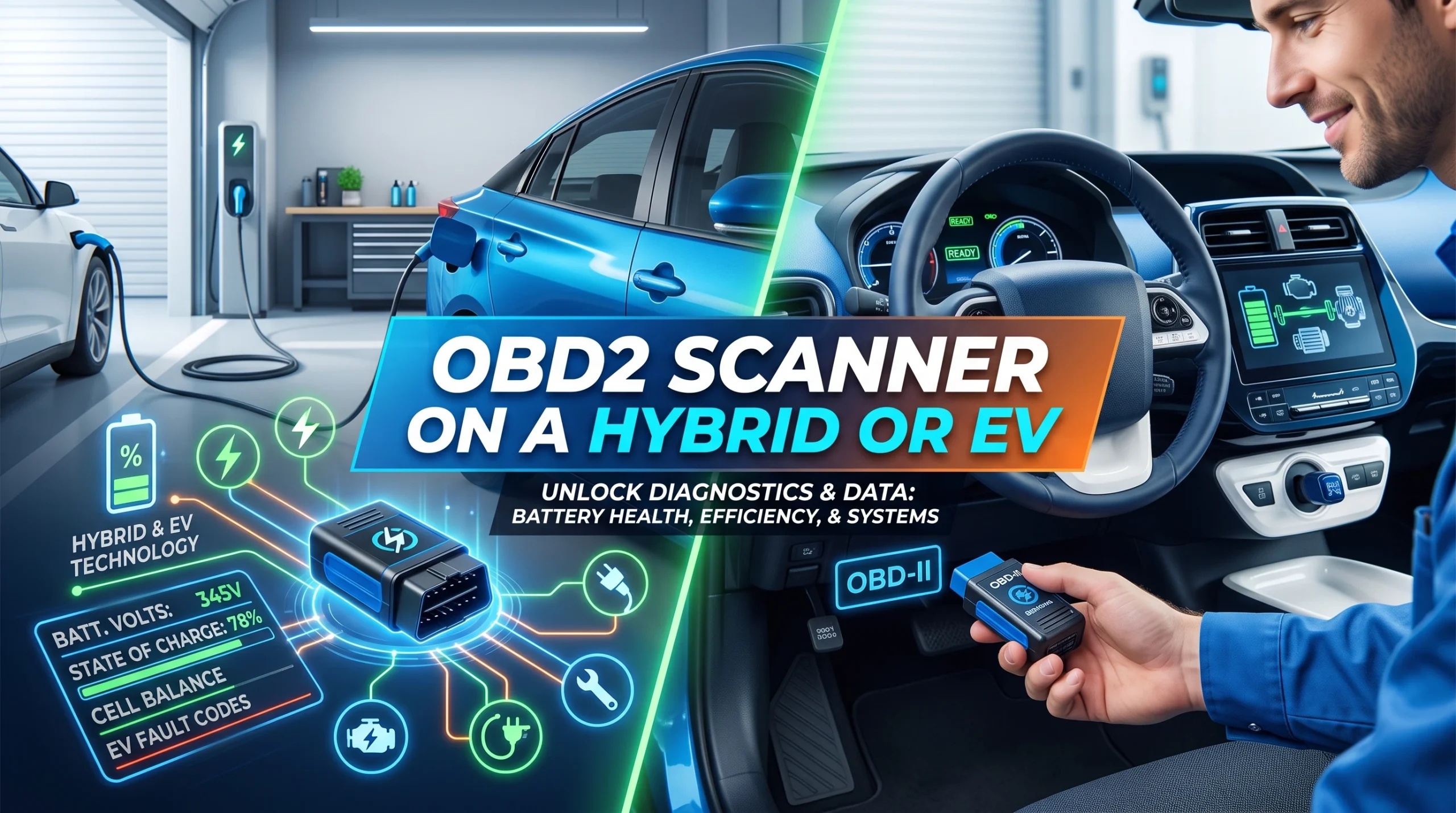
The port is still there and a generic scanner will still connect. What changes is how much the standard has to say. OBD2 is an emissions mandate, so on a hybrid it still covers the combustion side and does so usefully. On a battery electric car there are no tailpipe emissions to monitor, so the standardized layer has very little to describe, and reaching anything meaningful becomes a manufacturer-specific question rather than a standardized one.
Hybrids: the port still does most of its job
If your car has an engine, the emissions-related layer of OBD2 applies to it in the ordinary way. A hybrid still has to demonstrate that its combustion system is behaving, so a generic scanner reads engine codes, fuel trims, oxygen sensor data, readiness monitors and everything else you would expect on a conventional car.
What generic access does not reach is the electrified half: the traction battery, the inverter, the motor-generators and the control logic that decides when the engine runs at all. Those are manufacturer-defined systems and behave like every other non-emissions module, which is the same architecture we describe in scanner brand coverage.
The practical upshot for a hybrid owner is that an ordinary scanner is genuinely useful and worth owning, and that a warning relating to the hybrid system specifically is likely to need a tool with support for your make.
Battery EVs: the port is there, the mandate is not
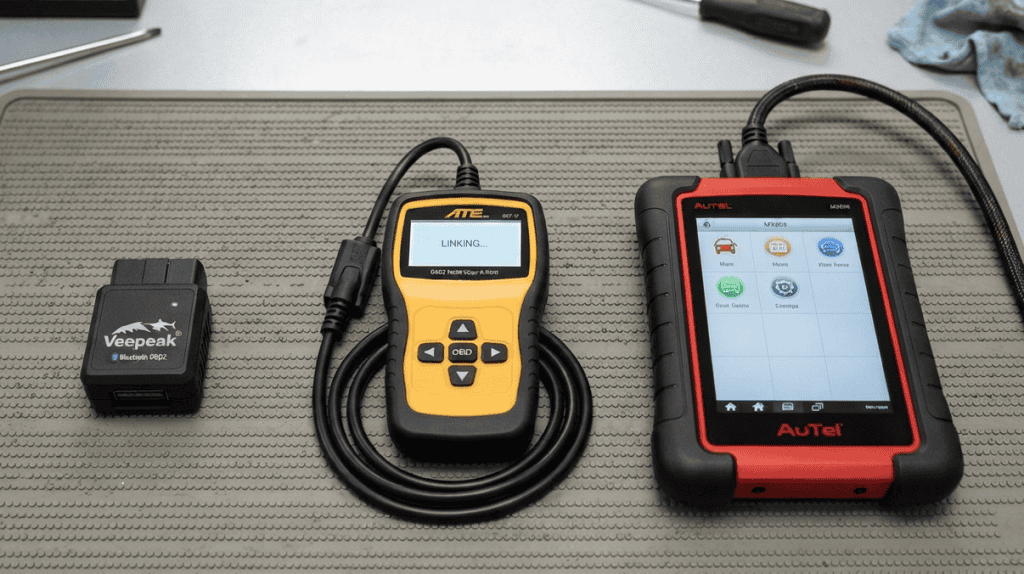
A battery electric vehicle usually has an OBD2-shaped connector in an OBD2-ish place, because the physical standard and the diagnostic tooling ecosystem are convenient and because other regulations and services expect the port to exist. What it does not have is the body of standardized emissions data the port was created to deliver.
So a generic reader plugged into an EV often reports very little, and readers frequently conclude the tool is broken. It is not. There is simply nothing in the standardized set for it to find, and everything that would be interesting sits behind manufacturer-specific access.
This is also a live area rather than a settled one. Regulators and manufacturers are still working out what standardized diagnostic access looks like for electrified vehicles, and what is true of a given model today may not describe next year’s. Treat any description of EV diagnostic access, this one included, as something to re-check rather than as a fixed fact.
What generic tools can usually still read on an EV
The honest answer is: less than you want, and it varies by manufacturer. Depending on the vehicle you may still get vehicle identification data, some basic status information, and access to modules that are shared with conventional cars, such as ABS or body systems, if your tool supports that make.
For anything specific to the electrified powertrain, state of health, cell balance, charging behavior, thermal management, you are looking at either a manufacturer tool or a third-party app built specifically for that brand, often with its own adapter requirement. Some of those exist and are well regarded within their communities. None of them is a generic OBD2 reader, and buying a generic reader expecting that data will disappoint you.
Newer electrified platforms also tend to be the ones that have moved to faster diagnostic protocols, which is a separate compatibility question and one covered in the protocol your scanner has to speak. If you are working out whether your vehicle is in scope for standard OBD2 at all, what OBD2 compliant means for your model year is the place to start.
High voltage: where a scan tool stops being the right instrument
This needs saying plainly. The traction system in a hybrid or EV operates at voltages that are dangerous in a way nothing on a conventional car is. Reading a code about it is safe. Acting on that code by opening anything is not, and is properly the work of a technician trained and equipped for high-voltage systems, with the right personal protective equipment and the right isolation procedure.
We are a gear and tooling site. We will tell you what a tool can see. We will not tell you how to work on a high-voltage system, and we would ask you not to treat a scan tool reading as permission to start. Please read our disclaimer. Interpretation of what a specific fault means for your car is also outside our lane; within our own network that belongs to autoartificer.com rather than to us, and we say so in words rather than sending you off-site.
Buying for an electrified car
- If you drive a hybrid, buy for the combustion side first. A capable generic tool covers the part that generates most warning lights, and it is the same purchase you would make for a conventional car.
- Check make-specific support if the hybrid system is your concern. Coverage lists should name your model and should name the systems, not just the brand.
- If you drive a battery EV, research your specific make’s community tooling before buying a generic reader. The useful answer is usually brand-specific software, sometimes with a particular adapter.
- Check protocol support on anything recent, since electrified platforms are heavily represented among vehicles using newer diagnostic protocols.
- Do not expect battery health figures from a generic tool. If a listing promises them without naming your make, treat that as marketing.
One related question that comes up on hybrids with a conventional twelve-volt battery is whether a replacement needs registering to the car. That is a real thing on some vehicles and it has its own page in battery registration and which tools can do it.
FAQ
Do electric cars have an OBD2 port?
Most have a connector in the usual place, because the physical standard and the tooling ecosystem around it are convenient. What they generally do not have is the standardized emissions data the port was created to carry, so a generic reader finds much less than it would on a combustion car.
Can a normal OBD2 scanner read hybrid faults?
It reads the combustion side normally. Faults specific to the traction battery, inverter or motor-generators are manufacturer-defined and need a tool with explicit support for your make.
Why does my scanner show nothing on my EV?
Usually because there is nothing in the standardized set for it to report on that vehicle. It is the expected result rather than a fault with the tool.
Can I check my EV battery health with an OBD2 scanner?
Not with a generic one. Battery state-of-health data is manufacturer-specific, and reading it typically requires brand-specific software and sometimes a particular adapter. Any generic tool claiming this without naming your make is worth treating sceptically.
Is it safe to plug a scanner into a hybrid or EV?
Connecting a scanner to the diagnostic port is a normal, low-risk operation. Working on the high-voltage system itself is not, and is properly a job for a technician trained and equipped for it.
AutoGearZone does not sell scanners and earns no commission from any brand or tool named here. More on how we work on our about page.