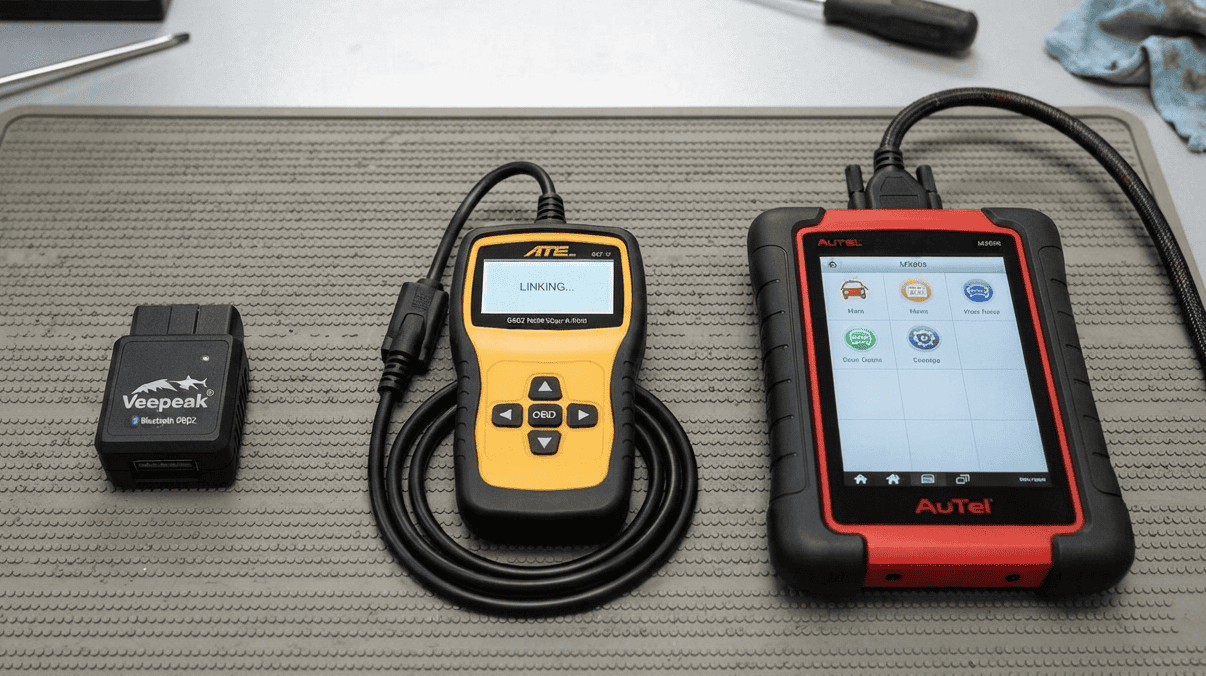
Some scanners are a straight purchase. Some are a purchase plus an optional renewal for updates. Some are effectively a subscription with a piece of hardware attached, where letting the payment lapse takes away functions you thought you had bought. The important thing is not which model is cheapest today, it is knowing which of those three you are signing up for, and the way to find out is to ask what stops working when you stop paying.
The four things a scanner subscription can actually be for
"Subscription" is used loosely across this market and covers at least four distinct arrangements. They have different consequences, so it is worth separating them.
Vehicle coverage and database updates. New model years, new platforms, expanded manufacturer-specific code definitions. This is the most common paid renewal, and it is the one with the clearest justification: someone has to keep documenting new vehicles. Coverage is not a fixed property of a tool, as we cover in scanner brand coverage; it grows while a tool is supported and stops when support ends.
Advanced or manufacturer-specific functions. Service resets, coding, adaptations, module-level access. On some tools these are bundled, on others they are unlocked per brand or per function, and on others again they lapse with the subscription.
App tiers. Where the hardware is a dongle and the intelligence lives on your phone, the app is usually where the tiering happens. A free tier reads generic codes; paid tiers add live data depth, manufacturer-specific definitions or extra features. This is covered from the app side in OBD2 apps compared.
Cloud services and reporting. Storage of past scans, shareable reports, multi-vehicle or fleet management. Genuinely optional for most home users, and often the tier that gets bundled into a headline price.
The question to ask before you buy: what happens when I stop paying
This is the single question that separates the three business models, and vendors rarely answer it prominently. The possible answers are:
- Nothing changes; you simply stop receiving new coverage. The tool keeps every function and every vehicle definition it had on the day the subscription lapsed. This is the friendliest arrangement and it is common on mid-range handhelds.
- You lose advanced functions but keep basic code reading. Perfectly reasonable, but you need to know it before you buy, not eighteen months later.
- The tool substantially stops working. Less common on consumer hardware, more common on app-dependent dongles where the paid tier is doing most of the work.
Ask it in those words before buying, and get the answer from the maker's own documentation rather than from a marketplace listing. A listing describes the sale; the documentation describes the ownership.
Where subscriptions are and are not normal
For a basic reader whose job is to pull a generic code and clear it, subscriptions are not the norm and you should be wary of one. The generic code set is defined by the standard and does not need a maintained database to stay useful.
For tools that go beyond that, some ongoing cost is normal and not a red flag in itself. Manufacturer-specific definitions, service procedures and new platform support represent genuine, continuing work. A tool that promises lifetime everything for a low one-off price is making a claim about the next decade that it may or may not be positioned to keep, and "lifetime" in this market has historically sometimes meant the lifetime of the product line rather than of your tool.
The honest framing for a first-time buyer is that a tool with a modest, optional renewal is often better value than one with no renewal and no updates, because the second will silently fall behind your car. If you are still deciding what class of tool you need, that decision comes first and is covered in choosing a beginner scanner and, at the other end of the market, in when the jump to a professional tablet is worth it.
How to compare two tools honestly on running cost
- Work out the cost over the period you actually intend to own it, not the purchase price. A cheaper tool with a mandatory annual renewal can overtake a dearer one within a couple of years.
- Check whether the renewal is per brand or all-inclusive. On tools that unlock manufacturer coverage separately, owning two makes changes the arithmetic completely.
- Check what a lapsed subscription leaves you with, as above. This is the difference between depreciation and disappearance.
- Check whether updates are delivered directly or need a computer, and whether that computer needs to be a particular operating system. This is not a cost, but it is a reason tools go un-updated.
- Treat any price you read anywhere, ours included, as needing verification. We deliberately publish no figures on this page because subscription pricing and tier structures in this market change often enough that a number would be wrong before most people read it.
FAQ
Do all OBD2 scanners require a subscription?
No. Basic code readers generally do not, and neither do many mid-range handhelds, which offer updates as an optional renewal instead. Subscriptions are most common on app-based tools and on tools offering manufacturer-specific functions.
What happens if I do not renew my scanner subscription?
It depends entirely on the tool. Some keep every function they had and simply stop receiving new coverage. Others lose advanced functions. A few app-dependent products lose most of their usefulness. Ask before buying rather than after.
Is a lifetime free update scanner a good deal?
It can be, but read what "lifetime" is attached to. It sometimes means the supported life of that product line rather than of your individual tool. A tool with a modest optional renewal that is genuinely maintained can be worth more than one with an unmaintained lifetime promise.
Why do scanner makers charge for updates at all?
Because vehicle coverage is continuing work. Every new model year and platform has to be documented, and manufacturer-specific code definitions and service procedures are not published by the standard. That work does not stop when the tool ships.
Do I need a subscription just to read a check engine light?
No. Reading and clearing generic emissions-related codes is defined by the OBD2 standard itself and does not depend on a maintained database. If a tool is asking you to pay for that, it is charging you for the standard.
AutoGearZone does not sell scanners and earns no commission from any brand or tool named here. More on how we work on our about page.